Selecting Business Solar Panels in Nashik requires more than comparing panel wattage and price. Commercial buyers need to consider how modules fit within the complete solar system, how much roof space is available and how the proposed installation matches the facility's electricity consumption.
Solar panel efficiency is one factor businesses often compare first.
Higher-efficiency modules can provide more rated capacity within a limited area. This can be useful when rooftop space is constrained, but efficiency alone should not determine purchasing decisions.
Businesses should also consider module dimensions, specifications, system design and compatibility with the inverter and mounting arrangement.
The amount of usable rooftop space is another important factor.
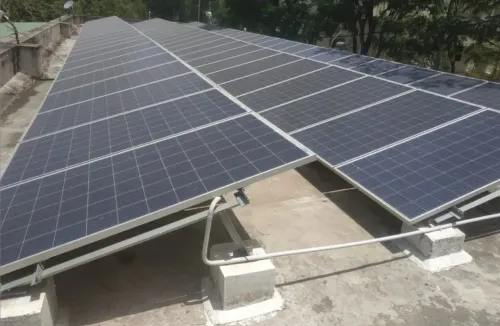
A building may appear to have a large roof, yet sections may be unavailable because of shading, equipment, access requirements or structural limitations.
A proper assessment should identify which parts of the roof can realistically be used for solar.
Businesses should also understand that panels are only one part of the system.
A commercial solar installation can include:
- Modules
- Inverters
- Mounting structures
- DC cabling
- AC cabling
- Protection devices
- Earthing equipment
- Monitoring
- Electrical integration components
The performance of the installation depends on how these components work together.
When comparing quotations, businesses should therefore request clear specifications for the complete system.
One proposal may appear less expensive because it uses a different structure, inverter configuration or installation scope. Without reviewing these details, buyers may be comparing packages that are not equivalent.
Generation estimates should also be examined carefully.
The rated capacity of a solar plant does not represent the amount of electricity generated every hour. Actual output varies based on sunlight, weather, temperature, shading and system losses.
Businesses should ask providers to explain how projected annual generation has been calculated.
Warranty information should also be reviewed in detail.
Different system components may have different warranty terms. Buyers should understand which warranty applies to which product, who provides it and what process is followed if support is required.
For businesses in Nashik, local service accessibility can also be useful.
Commercial solar systems operate over many years, and occasional technical inspection or maintenance may be required. Knowing how support will be handled after installation should form part of the purchasing decision.
Another common mistake is choosing a solar panel brand before the site has been properly assessed.
A stronger approach is to first understand electricity usage, available space and electrical conditions. Once these requirements are clear, the provider can recommend suitable equipment.
SAIDATTA SERVICES can be considered by commercial customers in Nashik comparing solar panel systems. Businesses should request clear technical information and evaluate the complete installation rather than focusing on module specifications alone.
For factories and warehouses, panel selection may also be influenced by available roof dimensions and the need to maintain service walkways. For offices and commercial buildings, space limitations may create different priorities.
Ultimately, business solar panels should be selected as part of an integrated energy system.
The best decision is not automatically the panel with the highest wattage or the lowest price. The stronger choice is equipment that fits the site, works appropriately with the rest of the system and supports practical long-term operation.
For commercial customers across Nashik and Maharashtra, this system-level approach creates a clearer and more informed basis for solar investment.